Our Notes & References
The ‘Great Game’ and early days of Russian Turkestan by an insider: a fine account and one of the few contemporary plate books of the region, which had just been conquered by Russia.
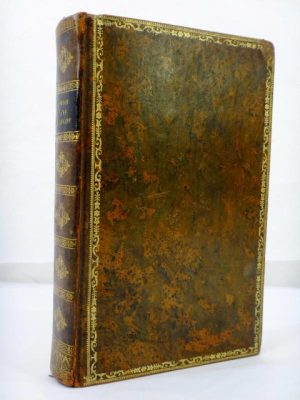
A fresh example of the first edition, with wide margins and in contemporary binding, complete with the first accurate map of Turkestan.
Before this publication, “almost nothing had appeared in the Russian press about the Turkestan region; Pashino’s book in its interesting presentation was the only one containing a detailed description of the newly conquered region, and was therefore a great success” (Polovtsov, our translation here and elsewhere). The book indeed quickly became popular, published just a year after the Russian forces took the city of Tashkent, and a year before Turkestan became a Governor-Generalship under Russia’s rule.
Formerly a secretary of the Russian embassy in Persia, Petr Pashino (1838-91), called by Charles Marvin in his Reconnoitring Central Asia as “the secret Russian agent”, arrived in Tashkent in 1866 to work at the Ministry of Foreign Affairs and to collect information about Turkestan and neighbouring Central Asian khanates. He embarked on an elaborate expedition following the Russian advance in the region, passing by forts Perovskii, Julek, and Sauran, as well as the cities of Tashkent and Khujand, which served as strongholds during the ongoing conquest of Central Asia.
The most impressive and substantial result of Pashino’s trip, this very lively account of his route starts from the departure from Orenburg and technical preparations for the expedition. “The Turkestan region has not yet been discussed by anyone in such detail” (Pashino): in the form of engaging sketches, he describes the life of the steppe nomadic peoples, as well as the settled inhabitants of local towns, his communication with the natives, the daily life of military garrisons, family and household rituals of different ethnic groups, peculiarities of the organisation of their social life, the nature of Turkestan and agriculture in Central Asia.
He also provides examples of local folk songs, some of which were translated and set into verse by the poet Dmitrii Minaev, while one is documented only as musical notes: “judge for yourself the beauty of the sounds and the dreariness of the chorus”. (Pashino).
The book is finely produced, in quarto format and richly illustrated with 20 full-page views of forts, cities and architectural landmarks of the region, including Tashkent and Khujand, vignettes depicting local types, and elaborate and creative initials illustrating the stories ahead. Most of the plates were lithographed after the drawings of Dmitrii Velezhev, and the remaining two were drawn by the painter and lithographer Aleksandr Gine after Mikhail K. Priorov’s photographs, which were among the very first photographic records made in Central Asia. The additional folding plate is a handsome double-page map based on the accurate surveys of the astronomer and diplomat Kirill Struve. “Made on the spot, it is considered to be the most accurate map of the Turkestan region so far” (Pashino).
Scarce: we couldn’t trace any copy at auction outside Russia, and only two complete there. OCLC locates nine copies (Harvard, NYPL, Columbia, Yale, UPenn, Cornell, University of Wisconsin – Milwaukee, Berkeley, and BL).
Provenance
Z. Poliakov[?] (signature in ink and initials in pencil, both to half-title); Soviet bookdealer’s small ink stamp to lower endpaper.
Bibliography
Marvin, Charles. Reconnoitring central Asia; pioneering adventures in the region lying between Russia and India, London, S. Sonnenschein, Le Bas & Lowrey, 1886; Polovtsov A. A. “Pashino, Petr Ivanovich”. Russkii biograficheskii slovar, T. 13, 1902, pp. 425-30.
Physical Description
Quarto (30.7 x 25.5 cm). Half-title, title, dedication leaf, [2] pp. preface, 176 pp., [3] ll. rare-book/pashino-turkestan-uzbekistan-central-asia-illustrated-first-edition-2849, with [20] lith. plates, most after nature by D. Velezhev, some after photographs by M. Priorov, and a double-page map by Butakov and Struve dated 1867 and chromolith. by Breze and Eiler, St. Petersburg, plates with printed captions, a couple of instances when the printed captions is pasted, many figurative vignettes woodengraved by Dagrel after Kriukov (one at beginning and one at end of each chapter).
Binding
Contemporary half pebble-grained morocco, very dark-green almost black, over pebble-grained paper boards of the same colour, spine with raised bands and direct gilt lettering, speckled edges.
Condition
Binding with minor marks esp. at boards edges, endpapers a bit spotted; very fresh internally, occasional minor foxing, more so on half-title and title, map’s upper edge a bit shaved, a couple of pencil notes.